
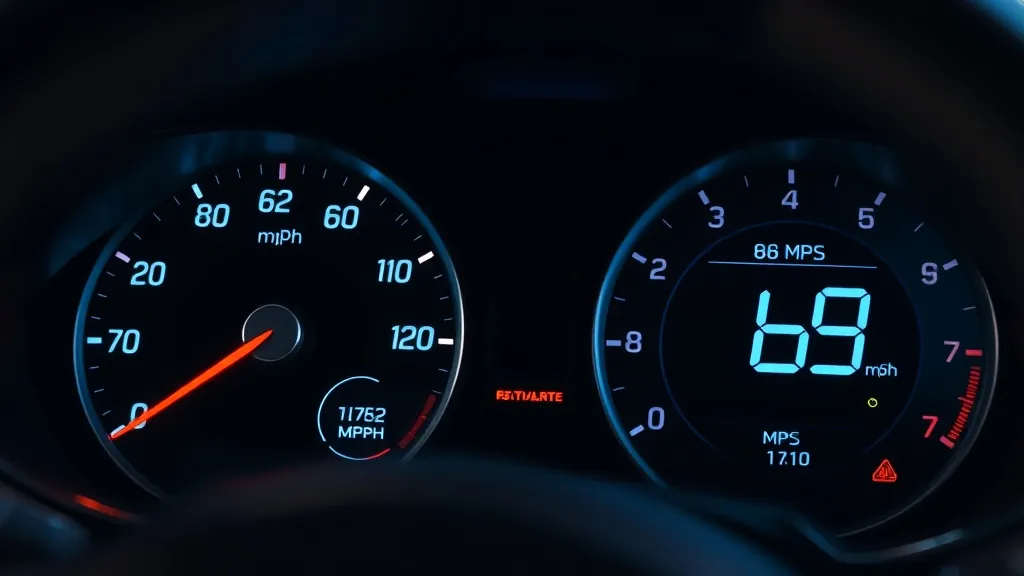
If you have used a GPS app while driving you have probably noticed it shows a different speed from your dashboard. The difference is real — and understanding it can save you from unnecessary speeding fines.
How your speedometer calculates speed
Your car’s speedometer measures how fast the wheel is rotating and converts that to a speed based on the wheel’s expected circumference. The calculation assumes the original factory tyre size. Worn tyres (smaller circumference) make the speedometer read high; wider aftermarket tyres can make it read low.
How GPS calculates speed
A GPS receiver calculates your actual ground speed by measuring your position change over time against a constellation of satellites. It is not affected by tyre size, wear or rolling radius — it simply measures how far you moved per second. Accuracy is typically within 0.5–1 mph.
Why US speedometers are always biased high
Federal regulations prohibit speedometers from reading low (you could be unknowingly speeding). So manufacturers intentionally add a 3–8 % upward bias. At an indicated 70 mph you may actually be travelling at 65–67 mph. That buffer is built into every new car sold in the US.
How to measure your speedometer error
Use our Speedometer Accuracy Calculator: enter your tyre size and the tool shows exactly how much your dash reads high. Or simply compare your indicated speed to a GPS HUD side by side on a straight road.
Which should you trust?
GPS speed is closer to your true ground speed. A GPS head-up display showing true speed is especially useful on speed-camera roads, where the camera measures ground speed, not your dashboard reading. Our GPS Lite shows accurate GPS speed on any vehicle.
As an Amazon Associate, HUDScreen earns from qualifying purchases. Pricing and availability are shown on Amazon and may change.
Frequently asked questions
Is GPS speed more accurate than a car speedometer?
In most cases, yes. A GPS receiver measures actual ground speed to within 0.5–1 mph. Car speedometers are legally required not to read low, so they are built with an upward bias of 3–8% that makes them less accurate than GPS at any given moment.
Why does my GPS show a lower speed than my speedometer?
Because your speedometer is deliberately set to read slightly high (by law it must not read low). The GPS reflects your true ground speed, which is typically 3–8% less than the dashboard figure.
Does tyre size affect speedometer accuracy?
Yes. Worn tyres (smaller rolling circumference) make the speedometer read even higher than usual. Larger-diameter aftermarket tyres can make it read low. Use the Speedometer Accuracy Calculator to factor in your exact tyre size.