
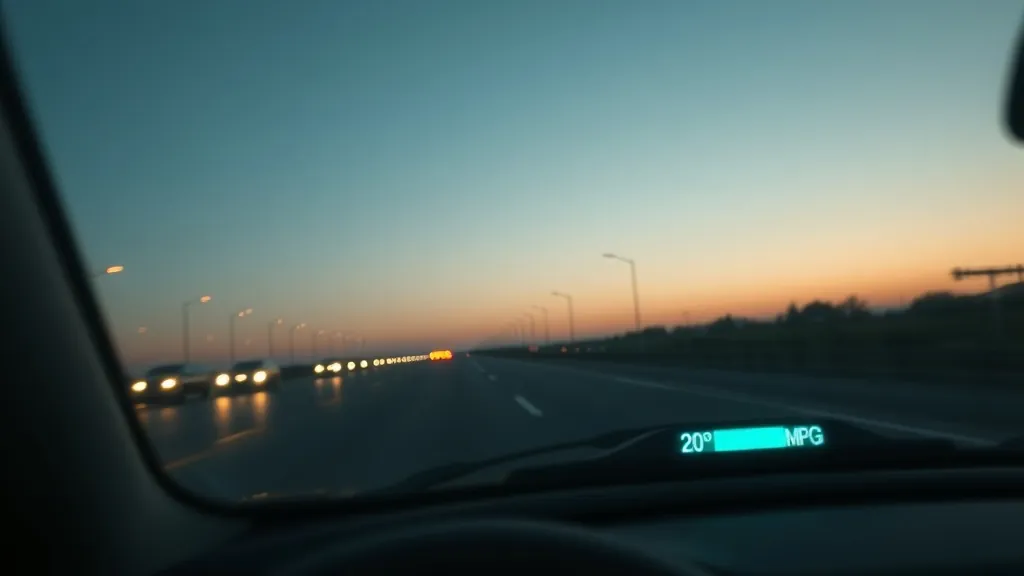
Fuel is the biggest variable cost of car ownership. These ten habits are well-documented by motoring research bodies and can reduce your consumption by 10–20 % with no hardware changes at all — though a head-up display makes several of them significantly easier to stick to.
1. Smooth, gentle acceleration
Hard acceleration burns 2–3× more fuel per mile than gradual build-up. Aim to reach your cruising speed over 10–15 seconds rather than 3–5.
2. Maintain a steady speed
Speed variation wastes energy. On the highway, every 5 mph of fluctuation above 55 mph costs approximately 5–7 % more fuel. Cruise control is the mechanical fix; a constant speed readout in your sight line is the awareness fix. Check your true speed with the Speedometer Accuracy Calculator.
3. Keep speed below 65 mph where possible
Aerodynamic drag increases with the square of speed. Above 65 mph, drag becomes the dominant fuel consumer: going from 65 to 80 mph typically adds 25–35 % more fuel use. A visible speed display makes this trade-off concrete and real.
4. Anticipate stops and coast early
Every time you brake from speed, you waste the fuel already burned to reach that speed. Lift off 300–400 feet before a red light and coast to it. Fuel injection cuts off completely on overrun in most modern cars (EFI cut-off) — you are burning zero fuel while coasting in gear.
5. Use engine braking, not the brake pedal
Coasting in gear to slow down is more fuel-efficient than accelerating to the same point and then braking. An OBD2 HUD showing throttle position or engine load makes this visible.
6. Maintain correct tyre pressure
Under-inflated tyres by 10 PSI increase rolling resistance by ~1 % and fuel use by 0.3 %. Check pressures monthly; cold tyre pressure is the accurate reading. Under-inflation also makes your speedometer read even higher, so GPS-verified speed matters more. Use the Speedometer Accuracy Calculator after checking pressures.
7. Switch off air conditioning at low speeds
A/C compressors add 5–15 % fuel load at city speeds. Below 45 mph, opening a window is more efficient. Above 60 mph, the aerodynamic drag of an open window exceeds the A/C cost — close the window and use A/C.
8. Remove unnecessary weight
Every 100 lbs of extra weight adds roughly 1–2 % to fuel use. Empty the boot of roof boxes, bike racks, and tools you are not using.
9. Combine short trips
A cold engine uses 20–40 % more fuel in the first 5 miles. Multiple cold starts compound the waste. Combine errands into one trip and start with the longest journey so the engine warms up fully.
10. Service the car on schedule
A dirty air filter, clogged injectors or worn spark plugs each add 2–5 % to fuel use. An OBD2 HUD that shows fuel trim values can flag a rich-running condition before it costs you money at the pump.
Calculate exactly how much you could save with the Fuel Savings Calculator.
As an Amazon Associate, HUDScreen earns from qualifying purchases. Pricing and availability are shown on Amazon and may change.
Our HUD picks
Three plug-in head-up displays, by what you want on the windshield.
 KUOWEIHUD K1 GPS Head-Up Speed DisplayGPS speed with no OBD2 port needed: fits EVs, hybrids and older cars.Check Price →
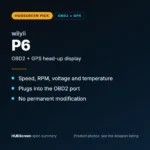 wiiyii P6 OBD2 + GPS Head-Up DisplaySpeed, RPM and temperature from the OBD2 port on compatible 2007+ gas cars.Check Price →
 VIVIHUD HUD-V5 Wireless CarPlay & Android Auto HUDWireless CarPlay and Android Auto directions plus GPS speed.Check Price →
As an Amazon Associate, HUDScreen earns from qualifying purchases. Price, shipping and returns are set by Amazon and the seller.
Frequently asked questions
What is the single most effective eco-driving habit?
Maintaining a steady speed is consistently the most impactful single habit. On the highway, reducing speed variation and staying below 65 mph can cut fuel use by 10–20% compared to variable, high-speed driving.
Does a head-up display help with eco driving?
Yes. A GPS HUD showing true speed prevents unconscious speed creep — the most common cause of unnecessary fuel use on long drives. An OBD2 HUD adds engine load and fuel trim data that makes the effect of your throttle inputs visible in real time.
Does cruise control save fuel?
On flat roads and motorways, yes — significantly. Cruise control maintains a more constant speed than most drivers do manually, eliminating the micro-fluctuations that waste fuel. On hilly roads, it can actually use more fuel by accelerating up hills to maintain set speed. Use it selectively.