
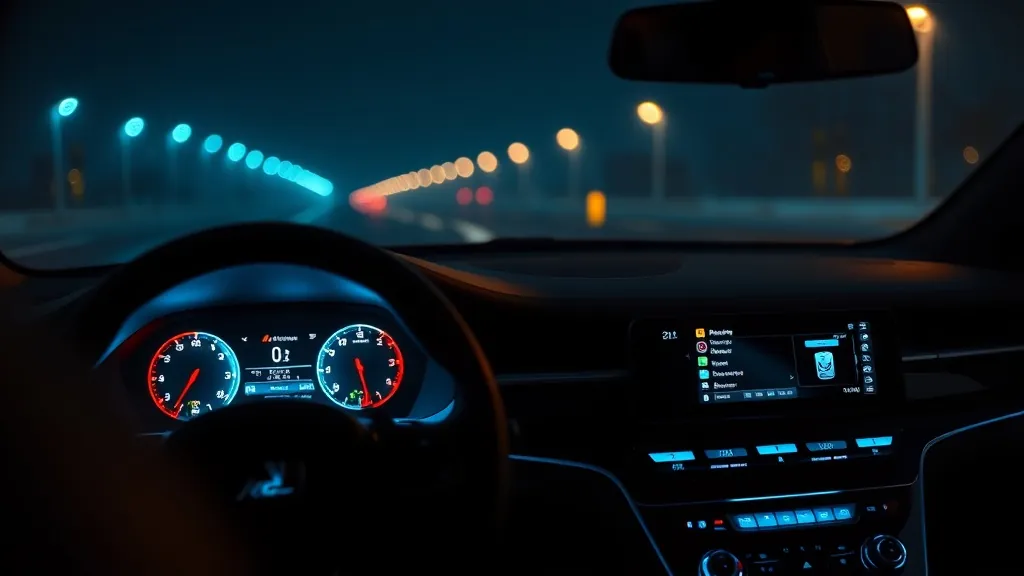
A factory head-up display is built into the car; an aftermarket HUD is an add-on you fit yourself. Both put data in your sight line — here’s how to choose. Wondering whether your 2026 model already has one? Check every 2026 car with a factory heads-up display.
Factory HUD: pros and cons
Factory systems are polished, full-colour and integrated with navigation — but they are expensive, often locked to higher trims, and impossible to add later if your car didn’t come with one.
Aftermarket HUD: pros and cons
An aftermarket HUD display for your car costs a fraction of the factory option, installs in minutes, and works on almost any vehicle. The trade-off is a simpler, smaller readout. For most drivers that’s a great deal.
When aftermarket wins
- Your car has no factory HUD option
- You want speed and engine data without the premium price
- You drive a BMW or Mercedes without the factory upgrade
Browse OBD2 HUDs for engine data or speedometer HUDs for a clean GPS speed readout.
Our HUD picks
Three plug-in head-up displays, by what you want on the windshield.
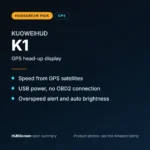 KUOWEIHUD K1 GPS Head-Up Speed DisplayGPS speed with no OBD2 port needed: fits EVs, hybrids and older cars.Check Price →
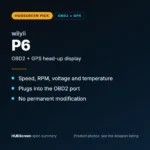 wiiyii P6 OBD2 + GPS Head-Up DisplaySpeed, RPM and temperature from the OBD2 port on compatible 2007+ gas cars.Check Price →
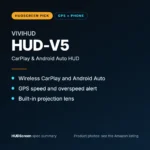 VIVIHUD HUD-V5 Wireless CarPlay & Android Auto HUDWireless CarPlay and Android Auto directions plus GPS speed.Check Price →
As an Amazon Associate, HUDScreen earns from qualifying purchases. Price, shipping and returns are set by Amazon and the seller.
Frequently asked questions
Is an aftermarket HUD as good as a factory HUD?
Factory HUDs are more polished and integrated, but a good aftermarket HUD delivers the core benefit — speed and data in your sight line — for far less money and fits almost any car.
Can I add a head-up display to a car without one?
Yes. An aftermarket OBD2 or GPS HUD plugs in and projects onto the windshield, adding a head-up display to virtually any vehicle.
Does an aftermarket HUD void my warranty?
A plug-in OBD2 HUD makes no permanent changes and is removed by unplugging, so it does not alter the vehicle.
What is the best aftermarket HUD for a car?
The best aftermarket car HUD depends on your vehicle: an OBD2 aftermarket HUD (like the wiiyii P6) for 2007+ cars adds live engine data, while a universal GPS HUD fits any vehicle. Both install in minutes with no wiring — see the picks in our HUD buyer’s guide.
Is an aftermarket car HUD worth it?
For the large majority of cars that never came with a factory HUD, an aftermarket HUD is the only way to get eyes-up speed and data — at a fraction of the cost of a factory option, and movable between cars. It is well worth it if you value not glancing down at the gauge cluster.
Wondering whether your car can take a HUD at all? See can you add a heads-up display to any car?
As an Amazon Associate, HUDScreen earns from qualifying purchases. Pricing and availability are shown on Amazon and may change.