
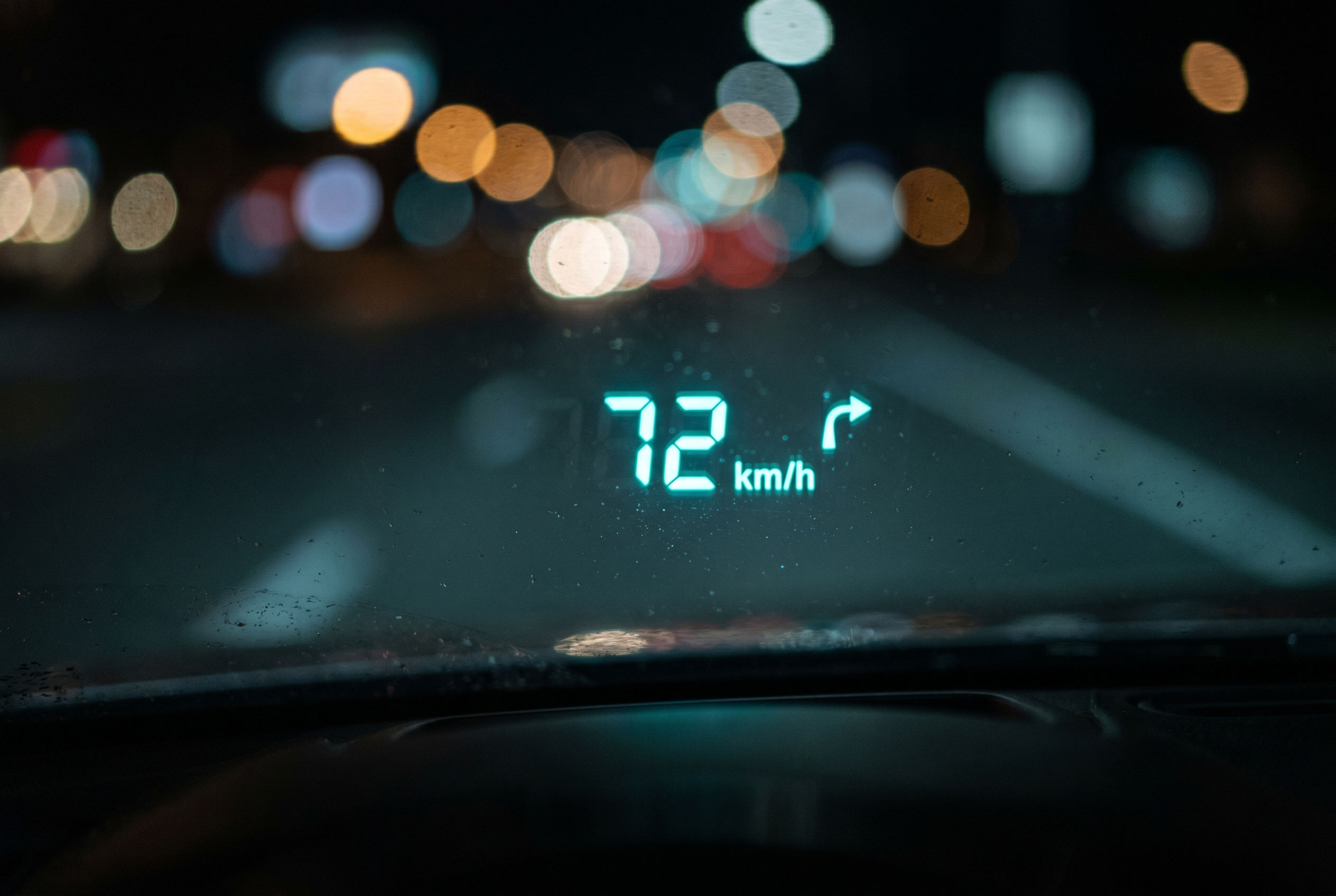
Your car’s speedometer is almost certainly not showing your exact speed. Most read a little high: at an indicated 70 mph you are often doing about 66–68 mph. Here is why it happens, how to measure your own car’s error in two minutes, and when a GPS reading is the better number to trust.
Why speedometers read high
Carmakers deliberately calibrate speedometers to read slightly fast, so the gauge never shows less than your real speed. In Europe and the UK this is a legal requirement: UNECE Regulation 39 says the indicated speed must never be lower than the true speed, and may be higher by up to 10% plus 4 km/h. Australia applies the same rule through ADR 18. The US has no federal speedometer accuracy standard, but because cars are engineered for global markets, most US models carry a similar upward bias.
How your speedometer measures speed
The speedometer counts how fast the wheels (or transmission output) are turning and converts that into speed using the expected circumference of the factory tyre. Anything that changes the real tyre size changes the reading:
- Worn tyres have a smaller rolling circumference, so each turn covers less ground and the gauge reads even higher.
- Larger aftermarket wheels or tyres do the opposite and can make the speedometer read low, which is the risky direction.
- Under-inflated tyres also shrink the rolling radius slightly.
How GPS measures speed
A GPS receiver works out speed from how your position changes between satellite fixes. Tyre size, wear and gearing don’t affect it, so at a steady speed on an open road it is usually very close to your true ground speed. It can lag or drop out in tunnels, parking garages, dense city streets and under metallic window tint.
Check your speedometer in 2 minutes
- On a straight, quiet road (with a passenger reading the numbers, never you), hold a steady speed such as 60 mph by the dashboard.
- Note the GPS speed from a phone app or GPS head-up display at the same moment.
- Enter both numbers in our Speedometer Accuracy Calculator to see the difference as a percentage.
A result of 2–5% over is normal. If your dashboard reads lower than GPS, check for non-standard wheels or tyres.
Why this matters
Speed cameras and police radar or LIDAR measure your true speed, not your dashboard figure. If you drive at an indicated speed that you think leaves a margin, a high-reading speedometer usually works in your favour, but after a wheel or tyre change the margin can disappear without you knowing.
Which number should you trust?
For day-to-day driving, the speedometer’s small over-read is a built-in safety margin. If you want to see your real speed, a GPS head-up display projects the satellite speed into your line of sight so you don’t have to look down at a phone. Our budget pick, the KUOWEIHUD K1, runs on USB power and needs no OBD2 connection; its listing notes a normal deviation of about 0.6–1.8 mph.
As an Amazon Associate, HUDScreen earns from qualifying purchases. Disclosure.
Our HUD picks
Three plug-in head-up displays, by what you want on the windshield.
 KUOWEIHUD K1 GPS Head-Up Speed DisplayGPS speed with no OBD2 port needed: fits EVs, hybrids and older cars.Check Price →
 wiiyii P6 OBD2 + GPS Head-Up DisplaySpeed, RPM and temperature from the OBD2 port on compatible 2007+ gas cars.Check Price →
 VIVIHUD HUD-V5 Wireless CarPlay & Android Auto HUDWireless CarPlay and Android Auto directions plus GPS speed.Check Price →
As an Amazon Associate, HUDScreen earns from qualifying purchases. Price, shipping and returns are set by Amazon and the seller.
Frequently asked questions
Is it legal for a speedometer to read high?
Yes. Under UNECE Regulation 39 (Europe, UK) and ADR 18 (Australia) a speedometer must never read below true speed but may read higher, within a limit of 10% plus 4 km/h. The US has no federal accuracy rule, and most cars sold there also read slightly high.
Why does my GPS show a lower speed than my speedometer?
Because the speedometer is calibrated to read slightly fast, while GPS measures your actual ground speed. A difference of a few percent is normal.
Is GPS speed more accurate than a car speedometer?
At a steady speed with a clear view of the sky, usually yes, because GPS is not affected by tyre size or wear. It can be less reliable in tunnels, garages and dense city streets.
How much does tyre wear affect speedometer accuracy?
Worn tread reduces the tyre’s rolling circumference, so the speedometer reads a little higher, typically by about 1–2% between new and worn tyres. Larger aftermarket tyres can make it read low instead.
Can I recalibrate my speedometer after changing tyres?
Many vehicles can be recalibrated electronically by a dealer or with a tuning tool. If that isn’t possible, a GPS speed display shows your true speed regardless of tyre size.