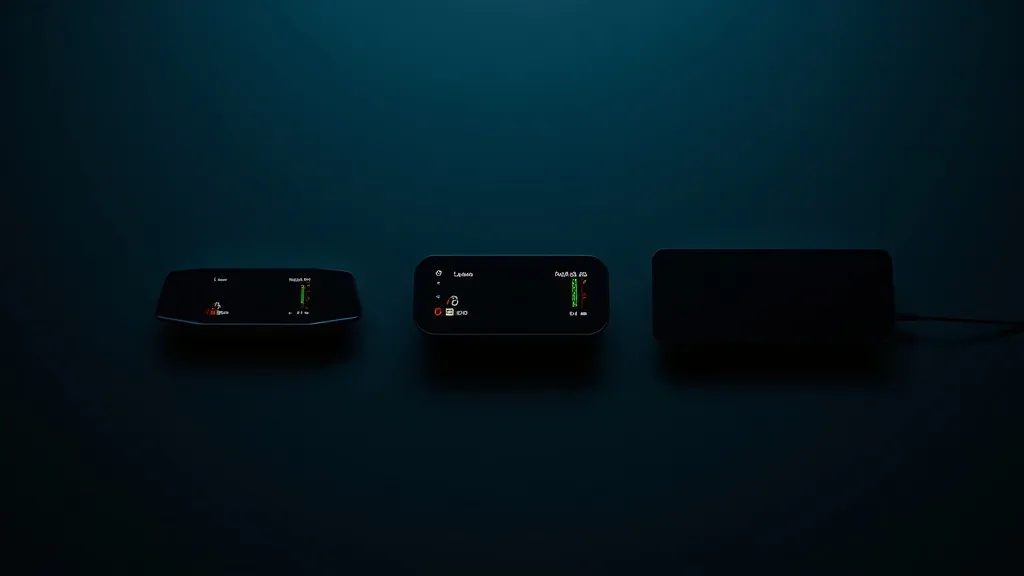
A head-up display for your car projects speed and driving data onto the windshield, keeping your eyes on the road. The market has three distinct types, each suited to a different driver. Here is everything you need to choose correctly in 2026.
Type 1: GPS HUDs (speed only, any vehicle)
A GPS HUD calculates your true ground speed from satellite positioning and projects it onto the windshield or a combiner display. It requires no OBD2 connection, works in every vehicle ever made, and is the easiest to install: plug into the 12 V socket, place on the dash, done.
Best for: drivers who want clean speed visibility, older cars without OBD2, motorcycles, EVs with limited OBD2 access, and anyone on a budget.
Our pick: GPS Lite — the #1 best-seller in Automotive Speedometers on Amazon.
Type 2: OBD2 HUDs (engine data + speed, 1996+ cars)
An OBD2 HUD plugs into the 16-pin OBD2 port under your dashboard and reads live engine data: speed from the wheel sensor, RPM, coolant temperature, battery voltage, and more. Many modern units are OBD2 + GPS dual-system, using GPS to supplement or verify speed.
Best for: daily drivers on 1996+ cars who want engine data, not just speed. Particularly useful for monitoring engine health, checking fault codes early, or tracking fuel economy.
Our pick: OBD2 Pro — OBD2 + GPS dual system, Amazon Speedometers #2.
Type 3: Smart / Navigation HUDs
Smart HUDs add phone navigation mirroring via Bluetooth, projecting your next turn onto the windshield. Some also support ADAS (lane departure warnings, forward collision alerts) via a front-facing camera. These are the closest aftermarket equivalent to a factory HUD.
Best for: frequent navigators, long-haul drivers, rideshare drivers who need hands-free turn guidance.
Our pick: RoadView Max — OBD2 + GPS + Bluetooth nav mirroring.
Display type: projector vs combiner
- Windshield projector — projects onto the glass itself using a supplied anti-reflection film. Largest image. Requires the film to avoid a double image.
- Combiner (pop-up semi-mirror) — uses a small transparent screen that pops up from the unit. No film needed, compact and clean, slightly smaller image.
Brightness: what to look for
Any quality HUD sold in 2026 should be readable in direct sunlight without an auto-brightness sensor; with one, it is readable in all conditions automatically. Budget units with only manual brightness adjustment are harder to use correctly.
How to choose by budget
- Under $50 — GPS HUD with auto-brightness, overspeed alarm. GPS Lite.
- $50–$120 — OBD2 + GPS dual system, engine data, fault code alert. OBD2 Pro.
- $120+ — Smart HUD with nav mirroring, larger display, ADAS options. RoadView Max.
Check your vehicle’s OBD2 compatibility before buying an OBD2 HUD using the HUD Compatibility Checker. Compare all types in the full HUD display buyer’s guide.
As an Amazon Associate, HUDScreen earns from qualifying purchases. Pricing and availability are shown on Amazon and may change.
Frequently asked questions
What is the best head-up display to buy in 2026?
It depends on what you want: the GPS Lite is the best budget GPS-only HUD, the OBD2 Pro is the best mid-range OBD2 + GPS dual-system unit, and the RoadView Max is the best smart HUD with navigation mirroring. All three are current Amazon best-sellers.
Does a head-up display work in all cars?
A GPS HUD works in any vehicle — car, truck, van, motorcycle or classic. An OBD2 HUD requires a standard OBD2 port, which is fitted to all US cars from 1996 onward. Some EVs have limited OBD2 access; a GPS HUD is safer for those.
Is a windshield HUD better than a combiner HUD?
A windshield projector gives a larger image but requires the anti-reflection film. A combiner HUD needs no film and is less affected by windshield angle or tint. Both work well; choose based on your windshield type and how large you want the display.