
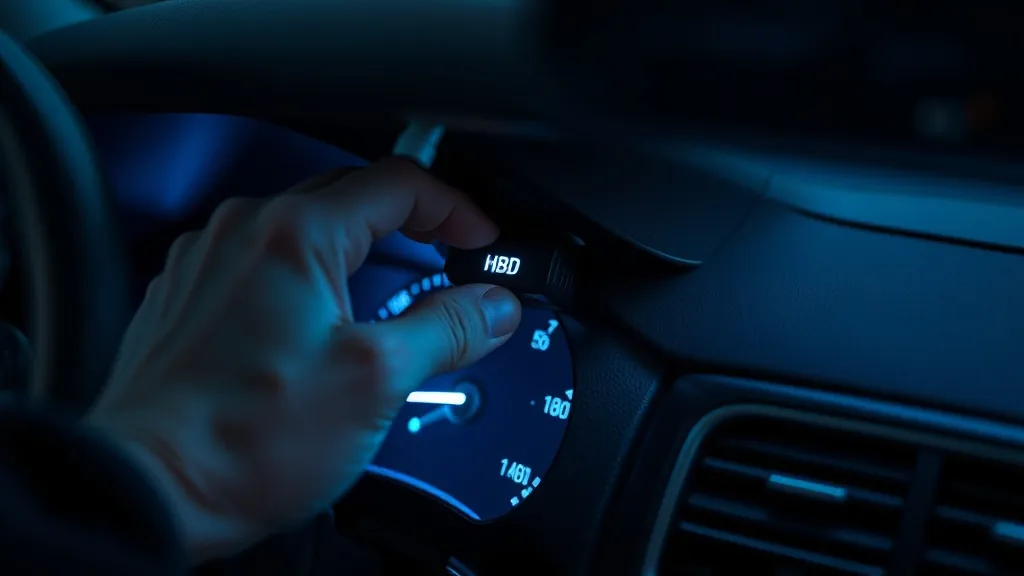
The OBD2 port (On-Board Diagnostics II) is a 16-pin socket fitted under the dashboard of virtually every car sold in the United States since 1996. It gives you direct, real-time access to your engine’s computer.
Why every US car has one
Congress mandated OBD2 from the 1996 model year to let mechanics and regulators read emissions data from a standardised connector. The same port that passes an emissions test also lets you read speed, RPM, fuel consumption, coolant temperature and hundreds of other live values.
What data the OBD2 port can provide
- Vehicle speed — from the wheel-speed sensor, in km/h or mph
- Engine RPM — live crankshaft rotation speed
- Coolant temperature — engine running temperature
- Battery voltage — charging system health
- Fuel trim and throttle position — fuel economy monitoring
- Diagnostic trouble codes (DTCs) — e.g., P0420 catalytic converter fault. Look up codes with the OBD2 Code Lookup tool.
Where is the OBD2 port in my car?
It is almost always under the dashboard on the driver’s side, within two feet of the steering column — a trapezoidal 16-pin socket. Some vehicles tuck it behind a small trim panel that pops off without tools. If you cannot find it, use the HUD Compatibility Checker which includes OBD2 port location guides by make and model.
What you can connect to the OBD2 port
- OBD2 HUD — projects live data onto your windshield while driving. See our picks at best OBD2 HUDs.
- Diagnostic scanner — reads and clears trouble codes
- Bluetooth dongle — streams data to a phone app
- Emissions tester — used by shops at inspection time
For driving data you want in your line of sight, an OBD2 HUD is the most practical use of the port. It plugs straight in, powers on with the ignition, and needs no app or configuration.
As an Amazon Associate, HUDScreen earns from qualifying purchases. Pricing and availability are shown on Amazon and may change.
Our HUD picks
Three plug-in head-up displays, by what you want on the windshield.
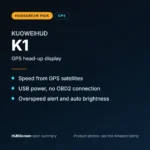 KUOWEIHUD K1 GPS Head-Up Speed DisplayGPS speed with no OBD2 port needed: fits EVs, hybrids and older cars.Check Price →
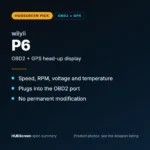 wiiyii P6 OBD2 + GPS Head-Up DisplaySpeed, RPM and temperature from the OBD2 port on compatible 2007+ gas cars.Check Price →
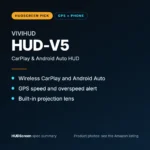 VIVIHUD HUD-V5 Wireless CarPlay & Android Auto HUDWireless CarPlay and Android Auto directions plus GPS speed.Check Price →
As an Amazon Associate, HUDScreen earns from qualifying purchases. Price, shipping and returns are set by Amazon and the seller.
Frequently asked questions
Does every car have an OBD2 port?
Every car sold in the US from the 1996 model year onward is required to have a standard OBD2 port. Most vehicles made after 1994 also have one, though the earlier protocol may differ slightly.
Is it safe to leave something plugged into the OBD2 port?
Yes, for most vehicles. The OBD2 port draws very little current and is switched off with the ignition in most US cars. Read-only devices like OBD2 HUDs and Bluetooth dongles do not affect your car’s electronics.
Can I use the OBD2 port to improve fuel economy?
You can monitor fuel-related data (throttle, fuel trim, engine load) through the OBD2 port and adjust your driving style accordingly. An OBD2 HUD gives you that data at a glance while you drive.